
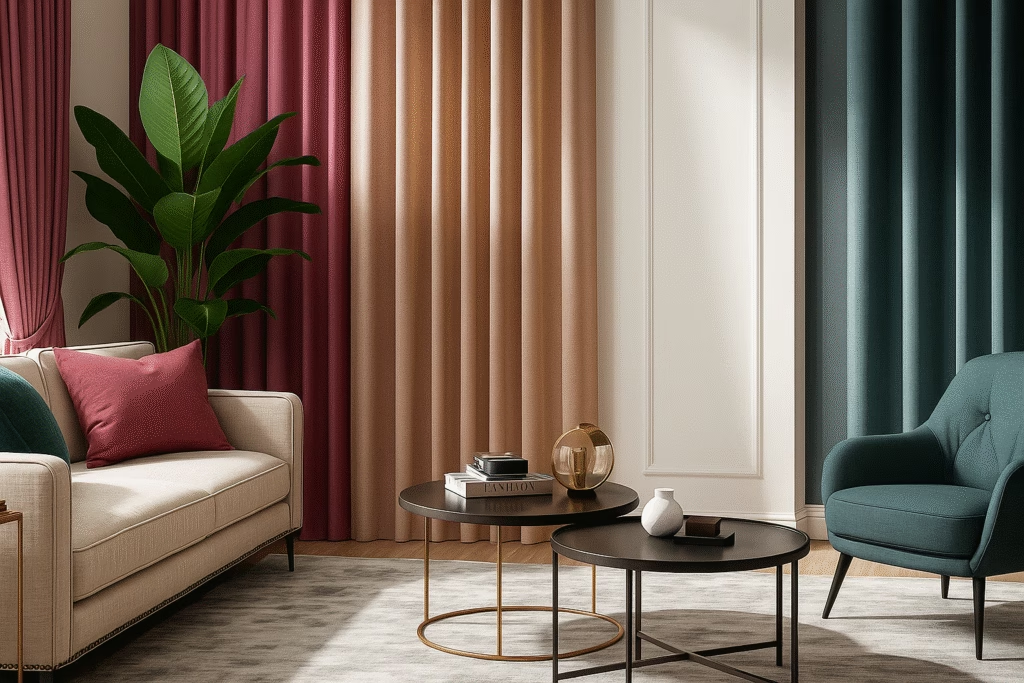
How to Choose Curtains for Your Living Room (Complete Guide)
Choosing the right curtains for your living room can completely transform the look, comfort, and functionality of your space. Curtains are not just decorative — they control light, provide privacy, improve insulation, and set the overall mood of the room.
In this complete guide, we’ll explain how to choose curtains for your living room, covering fabric types, colours, curtain length, stitching styles, lining/blackout options, and common mistakes to avoid. Whether your home style is modern, minimal, luxurious, or classic, this guide will help you make the right decision.
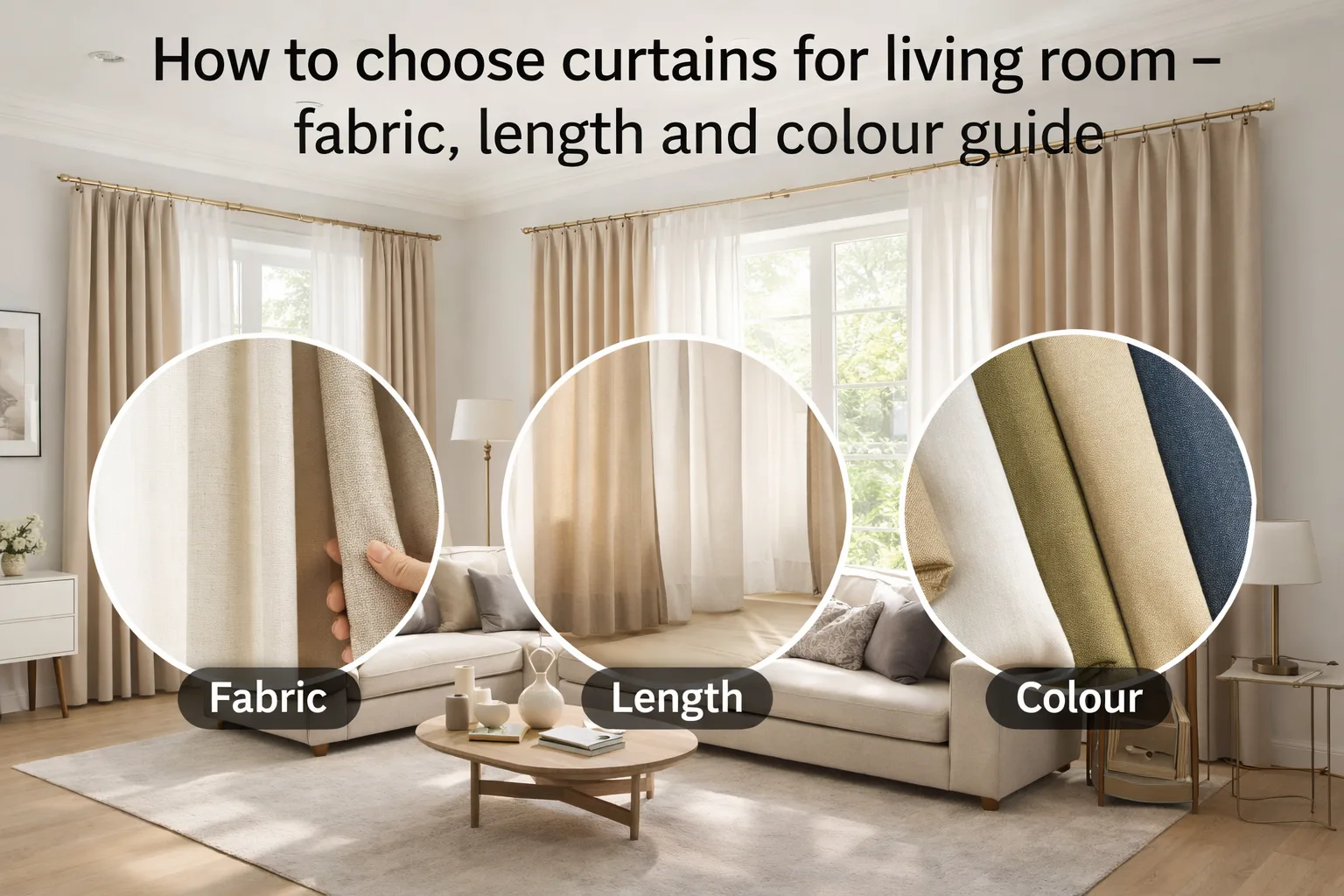
Why Curtains Matter in a Living Room
The living room is the most used space in any home — it’s where you relax, entertain guests, and spend quality time with family. Curtains play a major role in defining how this space feels.
- They control natural light during the day
- They add warmth and softness to interiors
- They provide privacy without blocking airflow
- They enhance furniture, wall colour, and decor
Choosing the wrong curtains can make even a beautiful living room feel dull or unfinished. That’s why understanding the basics is essential.
Step 1 — Choose the Right Curtain Fabric
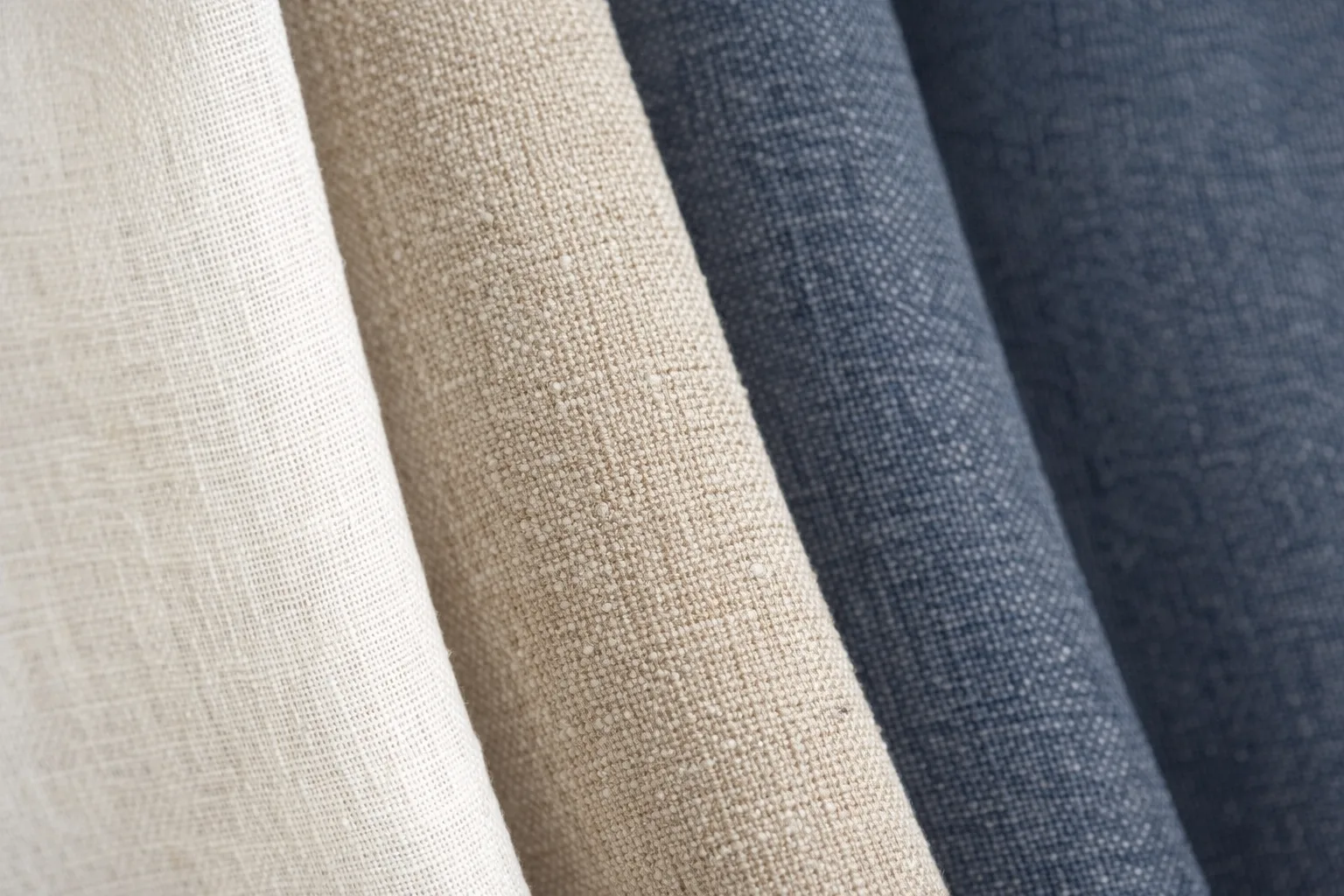
Fabric is the most important factor when selecting curtains for your living room. The type of fabric affects how the curtain drapes, how much light it lets in, and how premium it looks.
Sheer Curtains
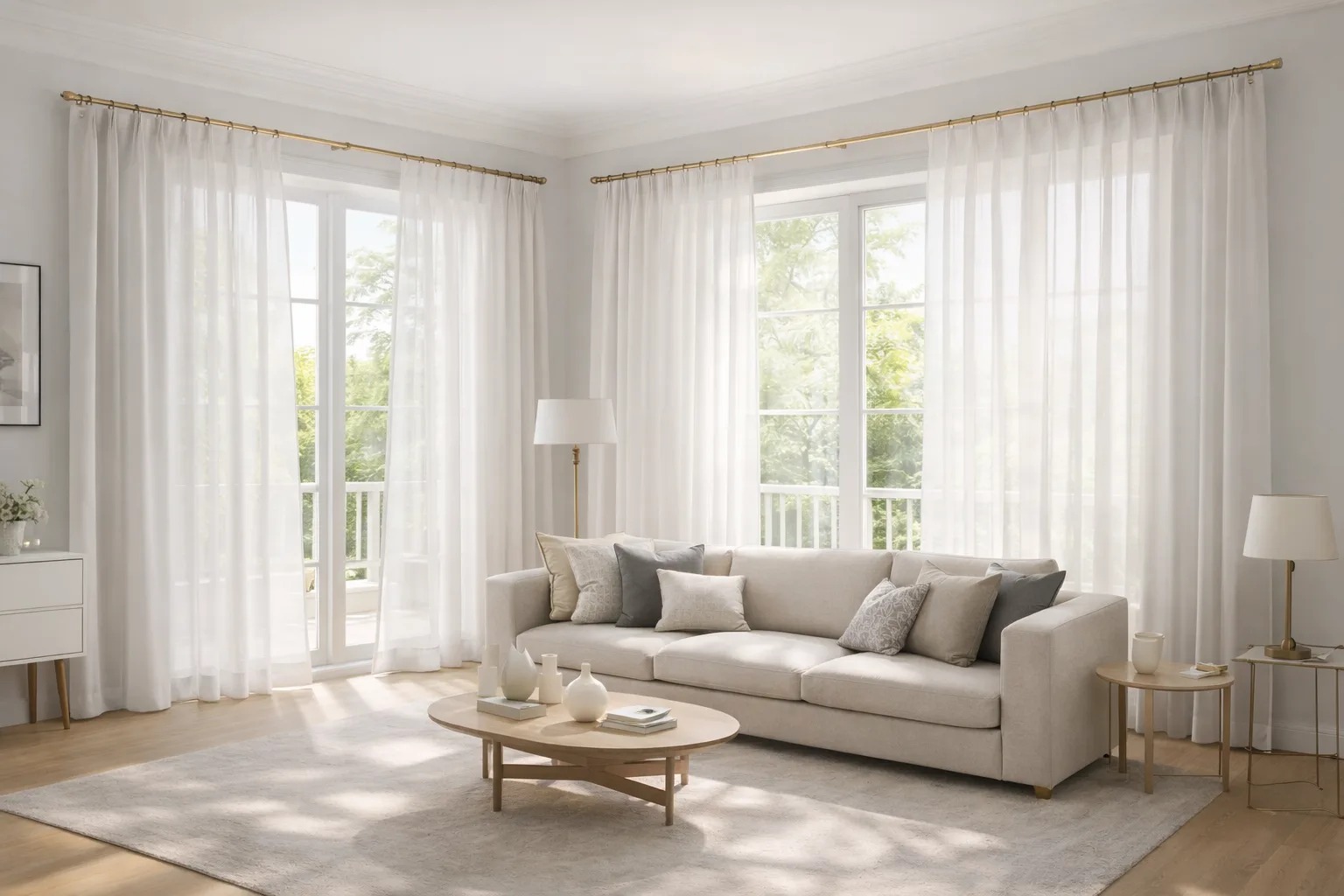
Sheer curtains are light, airy, and elegant. They allow natural daylight to flow into the living room while maintaining a soft level of privacy. Sheers look best when layered with thicker curtains or paired with blinds.
Best for:
- Bright living rooms
- Homes with large windows or balconies
- Minimal and modern interiors
Explore: Sheer Curtains
Main (Thick) Curtains
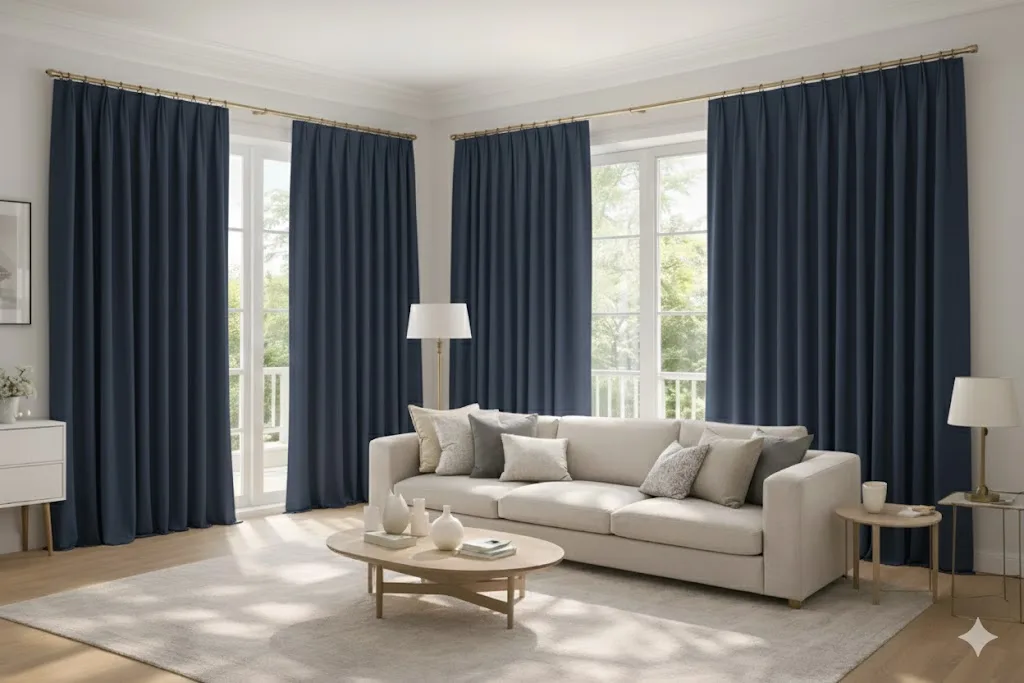
Main curtains are made from heavier fabrics such as polyester blends, jacquards, or textured weaves. They provide better privacy and block more light, giving your living room a richer, more finished look.
- Ideal for TV-facing windows
- Perfect for formal living rooms
- Adds a premium, hotel-like finish
Explore: Main Curtains
Step 2 — Decide the Right Curtain Colour
Curtain colour should complement your walls, furniture, and flooring — not overpower them. If you’re confused, start with a neutral shade and add contrast through cushions and rugs.
Light Colours (White, Beige, Pastels)
- Makes small living rooms look bigger
- Reflects natural light and keeps the room airy
- Works well with modern and Scandinavian decor
Dark Colours (Grey, Brown, Navy, Olive)
- Creates a cozy, luxurious feel
- Works well in large living rooms
- Hides dust and stains better
Browse all: Curtains Collection
Step 3 — Choose the Correct Curtain Length
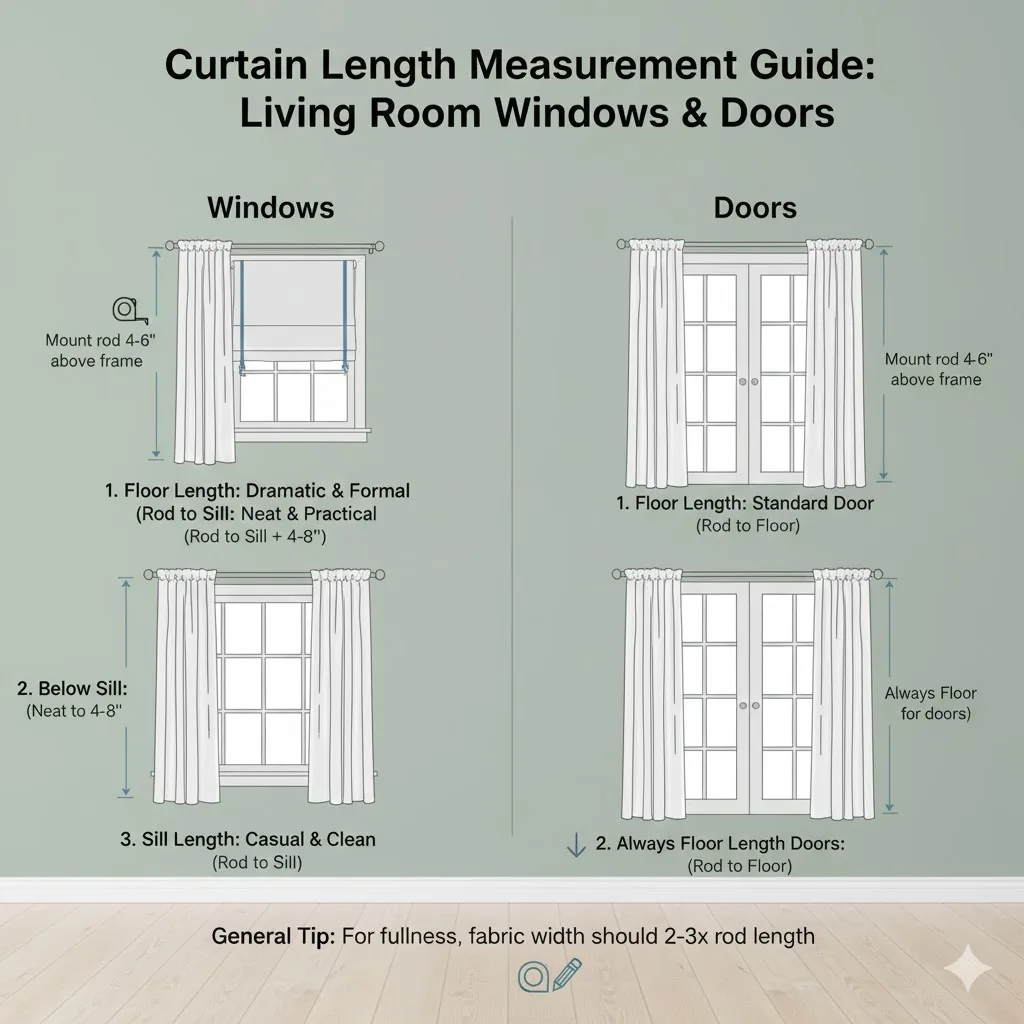
Curtain length can dramatically change the appearance of your living room. For the best finish, most designers recommend floor-length curtains.
- Floor-length curtains — Most popular, elegant look
- Slight puddling — Premium designer finish (especially in formal living rooms)
- Short curtains — Not recommended for living rooms (can look unfinished)
For best results, curtains should touch the floor or fall 1–2 cm above it. Always measure properly before ordering.
Step 4 — Pick the Right Stitching Style
Stitching style decides how curtains hang. The same fabric can look completely different depending on eyelet vs pleat stitching.
Eyelet Curtains
- Modern look
- Smooth sliding
- Best for casual living rooms
Pleated Curtains (American Pleat)
- Structured and elegant
- Perfect for formal settings
- Creates fuller drapes
Step 5 — Do You Need Blackout or Dimout?
Lining changes how much light enters the room and how the fabric drapes. For most living rooms, dimout is the best balance.
- None — Maximum daylight, best for bright spaces
- Dimout (70–75%) — Reduces glare, keeps the room comfortable
- Blackout (100%) — Best for TV rooms, strong privacy, and afternoon sun
Common Mistakes to Avoid
- Choosing curtains shorter than the window height
- Selecting colours that clash with wall paint
- Ignoring stitching style
- Using blackout curtains where natural light is needed
- Buying without measuring rod-to-floor properly
Final Tips for Choosing Living Room Curtains
Always prioritize natural light, choose timeless colours, and invest in good fabric quality. Curtains are a long-term decor element, and the right choice will enhance your living room for years.
If you’re unsure, start with neutral shades and floor-length curtains — they work in almost every living room.
Ready to explore? Shop Curtains
FAQs
Which curtains are best for a living room?
For most living rooms, layering sheer + main curtains works best. Sheers keep the space bright during the day, while main curtains add privacy and a premium drape.
What curtain length looks most premium?
Floor-length curtains look the most premium. Ideally, curtains should touch the floor or stay 1–2 cm above it for a clean finish.
Should I choose eyelet or pleat for the living room?
Eyelets look modern and are easy to slide. Pleats look more structured and premium — great for formal living rooms.
Do blackout curtains make the living room too dark?
Blackout curtains can make the room darker if used alone. If you want flexibility, use a dimout lining or layer blackout/main curtains with sheer curtains.